Food Waste is food and the associated inedible parts removed from the human food supply chain in three sectors: the retail, food service and household. In 2022, 19% of food available to consumers was wasted, at the retail, food service and household levels. 1.05 billion tonnes of food were wasted in 2022 (The Food Waste Index Report). 60% of this waste was from households, 28% from food service and 12% from retail.
The unused food in the households, food services, and retail becomes Food Waste. The food is not used for various reasons, like being rotten or considered inedible. The leftovers on plates are also Food Waste. The cultural practice of not eating food cooked a day before leads to the wastage of food. The management of food waste is primarily by households, food services and local administration. Food Waste either goes to landfills or is segregated for other uses, like preparing manure. Food Waste that is sent to landfills decomposes and produces methane. Methane, a greenhouse gas, traps more heat than carbon dioxide. Food Waste sent to landfills contributes up to 10% of all emissions.
When I look at the Food Waste at the household level, many practices are followed for generations. I looked at Pea, Pisum sativum. Pea pods are fruits. Mature pea pods contain cotyledons. In India ( for example), the cotyledons are used as a vegetable. The pod (or cover) without the cotyledons becomes Food Waste. For many households and food services, this pea pod without the cotyledons will find its way to local landfills. Few households, if possible, feed the pea pods without cotyledons to cattle. Some households consider preparing manure from Food Waste, and some municipalities efficiently segregate waste. Similarly, a considerable part of cauliflower becomes Food Waste. There are endless examples if we look at our kitchens. There is a need for a massive awareness of “What is Food Waste?”
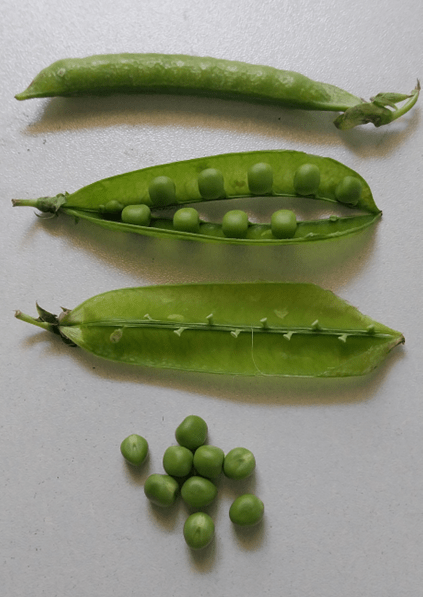
Food Waste definition includes the food in the food supply chain that is discarded or is not used for consumption. The concept of inedible parts of the food varies among cultures. It also varies among households within the same cultural background. For example, my grandmother used to prepare delicious fries with the bottle gourd and potato peels.
There have been multiple famines (shortage of food) in the past decade globally. At least 319 million people are facing acute food insecurity. This number is based on the data from the 120 countries where the World Food Programme (WFP) is operational. Conflicts, displacements, and extreme weather events (like drought, flood and storms), and food prices are the major causes of famines.
There is a food crisis in some parts of the world. Our planet Earth is facing extreme weather events, changing temperatures and rainfall patterns. Reducing emissions is not a choice but a necessity. In such a scenario, reducing Food Waste becomes a responsibility. Most of the time, when I think of reducing Food Waste, I think of finishing the food on my plate. This is true for many. But, reducing Food Waste is much bigger than this. There is a need for conscious efforts. Let’s ask a few questions to ourselves while growing, buying, preparing, consuming and disposing of food:
- Do I need to buy this extra Food?
- What do I do with the excess harvest from my kitchen garden?
- What am I going to do with the non-edible part of the Food?
- How can I use the non-edible part of the Food?
- How do I dispose the Food Leftovers on my plate?
The questions are endless. Reducing Food Waste is not an easy task for households and food services. Reducing Food Waste is not impossible either.

 Sustainability Insights
Leave a comment